ABOUT THE BOOKS

DEAR SISTER TERESA
SUMMARY
Spain, 1561. Inspired by the writings of Saint Teresa of Avila, this fictional story is about a beautiful nun in midlife who is actively teaching in her community as well as participating in life at her convent. In Teresa’s gatherings with the community, villagers bring up topics such as marital discord, recovery from the Crusades, women’s rights.
Teresa is summoned to Madrid by the Inquisition. The Inquisitor confronts her with the charge that she is teaching “sex education,” teaching villagers without the sanction of the church. Teresa stands up to the charge and produces letters from the villagers praising her work among them. The Inquisitor considers the letters and gives Teresa permission to continue her work among the troubled villagers. She returns home to the convent with a lighter heart.
In a letter, her widowed father prevails upon Teresa to visit him at the family estate. Thus, Teresa embarks on another journey away from the convent. Along the way she encounters a man who is to change her life, a painter in a parish church.
THE PAINTER’S EYE
SUMMARY
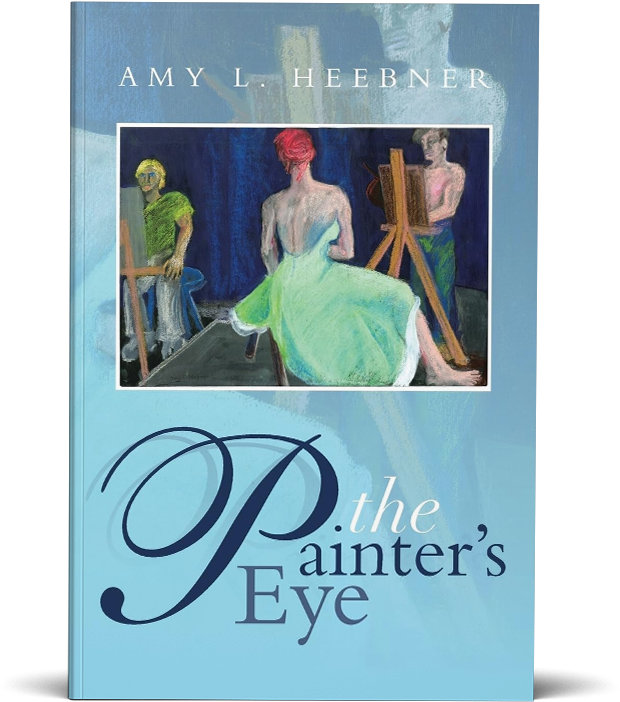
London, 1901. An American painter arrives in London, befriended by a British gentleman who dreams of becoming a respected art dealer. The dealer-friend has a list of wealthy prospective clients but the American painter has an eye for the ladies, including married ladies like a mysterious former actress.
Bridgerton (2020), the limited series on Netflix, is comparable in theme. This book is comparable in period and style with Martin Scorcese’s film, The Age of Innocence.
REMEMBERING RUEDI
In September, 2017, my beloved husband, Ruedi Kaegi, passed away suddenly. A heart condition did him in. I knew he was taking medication but didn’t realize he might die from the heart problem. He would not permit me to talk to his physician. I miss Ruedi very much. Almost all the people who remember him live at a far distance from me.
The first section of this narrative tells the story of how I met Ruedi early in my vacation in Switzerland, July 1990. I spent most of my vacation with him. Before I returned to New York to complete my research job, we decided to try to make it as a longdistance couple. He made plans to visit me in October in the U.S. Soon after his visit I moved to Switzerland so we could be in the same place. We married and lived together in Switzerland about four years, my adventure in becoming a European.
Then we made plans to move to the U.S.A., for reasons discussed in the text. I had to get a job offer in order to make the move feasible. When I finally got an offer, it was in Minnesota, a place where neither of us had lived before.
At the end of the narrative, I’ve included some of Ruedi’s letters to me. He wrote most of the letters when we were separated after my July, 1990, vacation in Zurich. His love shines through the letters and they also illustrate his life in Switzerland in a delightfully articulate way.
Book may be requested directly from author at zinniares@aol.com
Reviews
Dear Sister Teresa Review
I just finished reading Dear Sister Teresa, and it completely swept me away. You’ve crafted something that is not only historically rich but emotionally resonant—a fictional mosaic that feels intimate, defiant, and quietly revolutionary. Sister Teresa isn’t just a nun navigating 16th-century Spain—she’s a force of nature bridging mysticism, morality, and the unspoken needs of a community on the edge of change. The dialogue between tradition and spiritual autonomy is so timely, yet deeply rooted in history. With echoes of Saint Teresa of Avila herself, you’ve revived a character who lives between cloistered devotion and radical compassion. It’s powerful, elegant, and quietly subversive. Jerry Miller
The Painter’s Eye Review
Art, Intrigue, and the Dangerous Allure of Beauty Amy L. Heebner’s Painter’s Eye is a deftly crafted tale that paints not only on the canvas but across the turbulent social mores of Edwardian society. Set in the gilded shadows of 1901 New York and London, this novel hums with the elegance of fine art, the tension of hidden desire, and the precarious dance between ambition and scandal. At its center is an American painter, bold and enigmatic, who arrives in London with more than just brushes and talent—he carries a hunger for beauty in all its forms, including the forbidden. His charm proves irresistible to a number of women, including those who have long since sworn their hearts elsewhere. Among them is a former actress turned society mystery, a woman cloaked in secrets and allure. Their relationship is the slow burn that keeps the pages turning with a velvet tension. But what makes this novel shimmer is the painter’s unlikely friendship with a British gentleman—a man driven not by art’s inspiration but by its value. He dreams of being a dealer to the elite, and sees in the American both his ticket and his test. Together, their ambitions intertwine, but so too do their vulnerabilities. As the dealer balances social aspiration with the volatile impulses of his friend, the novel poses a powerful question: What happens when art, love, and ambition all demand center stage? Heebner’s writing is lush yet precise, filled with sensory detail that places the reader directly in the mist-draped streets of London, in candlelit parlors where secrets smolder, and inside the studios where the artist’s “eye” is both gift and curse. With sharp dialogue and atmospheric depth, Painter’s Eye doesn’t just tell a story—it seduces the reader into the very world it creates. This is historical fiction at its most evocative: refined yet raw, elegant yet provocative. For readers who relish period drama laced with moral complexity, Painter’s Eye is a portrait worth studying—and savoring. It is good for movie Adaptation.
Alejandro Ruiz
“All the world’s a stage, the men and women are merely the players,” is exactly what THE PAINTER’S EYE brings forth. It is an intriguing story set at the beginning of the twentieth century. The screenwriter, Ms. Heebner, eloquently sets the tone and atmosphere of what life must have been like at this time. She cleverly has created each character with their own struggles to move ahead as well as being a pawn in one another game of chess. However, nobody loses, they just sacrifice what love might be, what lust is, and who appreciates art more.
Nick Rafello
Book Review: The Painter’s Eye by Amy L. Heebner Art, Intrigue, and the Dangerous Allure of Beauty Amy L. Heebner’s The Painter’s Eye is a deftly crafted tale that paints not only on the canvas but across the turbulent social mores of Edwardian society. Set in the gilded shadows of 1901 New York and London, this novel hums with the elegance of fine art, the tension of hidden desire, and the precarious dance between ambition and scandal. At its center is an American painter, bold and enigmatic, who arrives in London with more than just brushes and talent—he carries a hunger for beauty in all its forms, including the forbidden. His charm proves irresistible to a number of women, including those who have long since sworn their hearts elsewhere. Among them is a former actress turned society mystery, a woman cloaked in secrets and allure. Their relationship is the slow burn that keeps the pages turning with a velvet tension. But what makes this novel shimmer is the painter’s unlikely friendship with a British gentleman—a man driven not by art’s inspiration but by its value. He dreams of being a dealer to the elite, and sees in the American both his ticket and his test. Together, their ambitions intertwine, but so too do their vulnerabilities. As the dealer balances social aspiration with the volatile impulses of his friend, the novel poses a powerful question: What happens when art, love, and ambition all demand center stage? Heebner’s writing is lush yet precise, filled with sensory detail that places the reader directly in the mist-draped streets of London, in candlelit parlors where secrets smolder, and inside the studios where the artist’s “eye” is both gift and curse. With sharp dialogue and atmospheric depth, Painter’s Eye doesn’t just tell a story—it seduces the reader into the very world it creates. This is historical fiction at its most evocative: refined yet raw, elegant yet provocative. For readers who relish period drama laced with moral complexity, Painter’s Eye is a portrait worth studying—and savoring. It is good for movie Adaptation.
Alejandro Ruiz
